

Connected TV media, one month$8,000
White-label Connected TV for agencies
Sell Connected TVas

You keep the client, the pricing and the credit. We plan, buy and optimise the streaming under your name, then hand you the report with your logo on it. Your client never hears ours.
- Premium streaming, bought in-house
- A live plan in days
- Your NDA and non-solicit, signed first
The split
You keep the client. We run the screen.
Nothing about this is a platform login with nobody behind it. It is a second media team that answers to your agency, works in your template, and is never on the invoice your client sees.
You keep
Everything the client sees, and everything they pay.
- The client relationship
- The strategy and how it is framed
- The price the client pays
- Creative direction
- Landing pages and the CRM
- The story in the quarterly review
- Your name on the deck and on the monthly report
We run
Everything behind the screen.
- Inventory access and the deal IDs
- Trafficking
- Frequency caps and dayparting
- Household targeting
- The Connected TV and audio mix
- Mid-flight optimisation
- The raw performance file, to you
Client contact: almost never us. Silent partner by default. Available as “our CTV specialist” on a call if you want the technical questions answered by whoever is buying. Your client never has to learn a DSP.
What your client is buying
Thirty seconds on the biggest screen in the house.
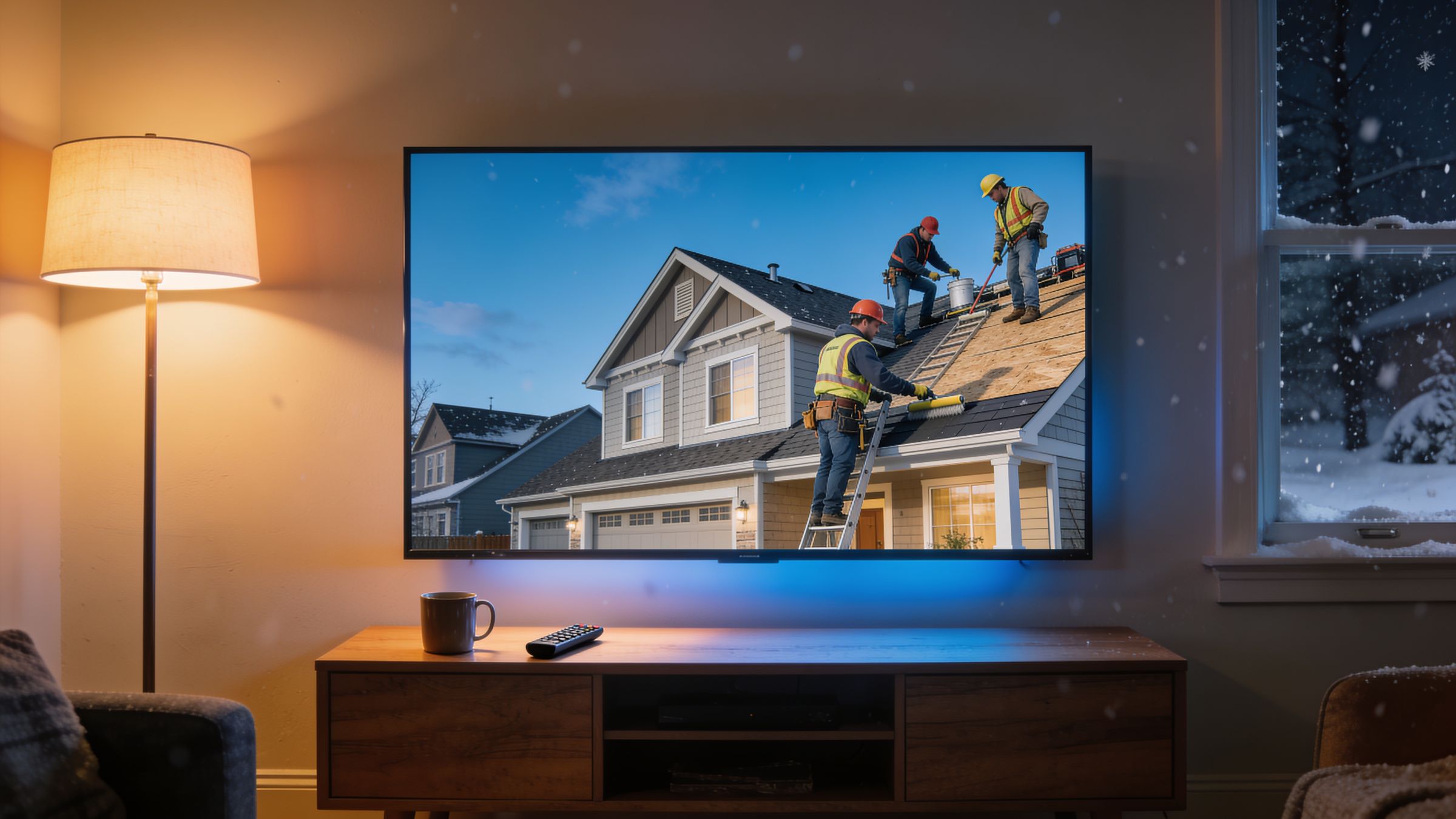
Television, watched on a television.
Ad-supported streaming on the set in the living room, through a smart TV, a stick or a console. It plays full screen and cannot be skipped, the way a TV commercial does. Completion runs 90 to 98% on real inventory; under about 90 means something is wrong with the supply or the file, and we would tell you.
Bought across premium and free ad-supported inventory, through direct publisher and private-marketplace paths where they exist, and the open exchange only when the quality holds.
“We do not own Hulu. Nobody honest says that.”
Launch Media, on how the inventory is actually bought
HuluDisney+ and ESPNParamount+PeacockThe Roku ChannelTubiPlutoYouTube on TVPodcasts and streaming radio
Tonight7:007:308:008:309:009:30HuluDrama:30Your clientComedy:30Your clientLate showPeacockLocal news:30Your clientLive football:30Your clientPost-gameRoku ChannelMovie:30Your clientReality:30Your clientMovieTubi:30Your clientMovie:30Your clientCrime seriesPlutoWeather:30Your clientClassic sitcoms:30Your clientDocumentaryYouTube on TVHighlights:30Your clientHome renovation:30Your clientLive hockey
A diagram, not a schedule. The genres are generic and every red cell is the same thing: your client’s spot, in the households you chose, at a frequency that sticks. Which shows, which apps and which hours are decided in the plan, per market.
The local argument
Not 80 million households. The right 40,000.
National platforms are built for national budgets and national identity graphs. A heating company in Minnesota does not need the country. It needs its trade area, on the big screen, at a frequency that sticks.
We tighten to a metro, a county, a zip list or a radius, without the national platform’s “minimum audience or we will not turn it on” problem. Sports adjacency, local news and weather streaming, the metro versus outstate mix, weather-driven demand, and not burning budget on seasonal lake-home viewers when they are not the customer.
What to expect
The first ninety days, honestly.
This is how it usually goes. It is framing, not a promise, and it is what you can put in front of a client before the first dollar is spent.
01Month one
Frequency builds. Do not judge leads yet.
Impressions, delivery and frequency, building toward a few exposures per household. This is the month the client sees the ad on their own TV and calls you about it.
02Month two
Branded search and direct traffic usually start moving.
If the creative and the geography are right. This is the first thing worth putting next to the search numbers.
03Month three
Lift is fair to talk about.
Often 10 to 25% against baseline on site or store activity, when measurement is set up. Cost per acquisition usually improves as frequency and creative settle.
On price: local premium CTV commonly runs high teens to mid-30s CPM. Not the $8 remnant number in someone’s deck. Audio is cheaper reach alongside it, in the same households.
The commercials
Price a campaign for your client.
We quote a media cost per campaign. What you charge on top is your business: you set the margin and we never see your invoice. Drag the two sliders and the paperwork writes itself.
$6,800 in media buys roughly 320k to 383k impressions a month: about 59k to 117k households at three to six exposures each.
An estimate from the same planning model we quote from. The media cost is quoted per campaign, because what a thousand impressions costs moves with the market, the daypart and the season.
Media cost, one month$6,800
Your agency keeps$1,200a month · $14,400 a year
One partner’s first ninety days
“They look bigger without adding headcount.”
A mid-size full-service shop, strong in traditional and digital, kept losing pitches the moment streaming TV came up. We white-labelled CTV and audio under their brand for a regional home-services book. They sold it, we ran it.
Ninety days in they had completion rates in the mid-90s and site lift they could put next to search, and they stopped introducing a third vendor on every pitch. They added two more clients on the same stack, because the first one did not blow up their operations.
No names. That is rather the point of white label.

Who this is for
A fit, or not a fit.
This is a fit if
- A client is asking about streaming TV and you do not buy it today.
- You already sell search or social and want a fourth line item.
- You want the report your client reads to carry your name, not a vendor's.
- You want to keep the relationship rather than refer it away.
It is not a fit if
- You already run $50,000 a month or more through CTV with your own DSP seats and a programmatic buyer. Run it yourself.
- You need a two-week flight. CTV needs a runway.
- You want a self-serve login with nobody behind it.
The awkward questions
Asked and answered.
Will you go around us to our client?
No. Your client never hears our name unless you introduce us. We sign your NDA and your non-solicit before a brief changes hands, and you hold the relationship.
What if the client asks who is running it?
Your call, and both answers work. Silent partner is the default. If they want the technical detail from whoever is actually buying, we join the call as your CTV specialist. A small “powered by” line is available; most partners decline it.
What is the minimum?
A single-market test that is not a science project runs $2,500 to $5,000 a month in media. A tight metro geography works at the low end; statewide or several markets needs more. Below that you can run CTV, but you cannot build enough household frequency to judge anything, and we would rather say so first.
How fast can it be live?
A live plan in days, not a six-week platform onboarding. Your client never has to learn an ad platform. You do not have to either.
What if it underperforms?
You hear it from us before you hear it from the client. Completion under about 90% means something is wrong with the supply or the file, and it gets fixed that week, not at the next quarterly review.
Do you make the ads?
Yes. Our production partner films your client's commercial, or we run one they already have; the creative direction stays yours.
What if we want out?
The work is month to month. No annual lock-in for you or for your client.
Is it only Connected TV?
CTV is what this page is about, but streaming audio (podcasts and streaming radio) runs alongside it on the same plan, and it is cheaper reach in the same households.
Put your name on it
Connected TV, by your agency.
Get the partner rate card
Or call (612) 516-3549 and ask for the partner rate card.
See all of Launch Media at wearelaunchmedia.com.